
Almost every Mission Valley travel guide is a summer guide. Cherry season, lake days, powwow weekend, Glacier traffic. That makes sense; the summer is when most of the visitor economy operates and when most of the things visitors come here for are doing what they do. But the valley exists year-round, and the off-season has its own argument.
This is a guide to coming between November and April: what’s open, what isn’t, and why someone might choose the cold version.
The valley in winter, briefly
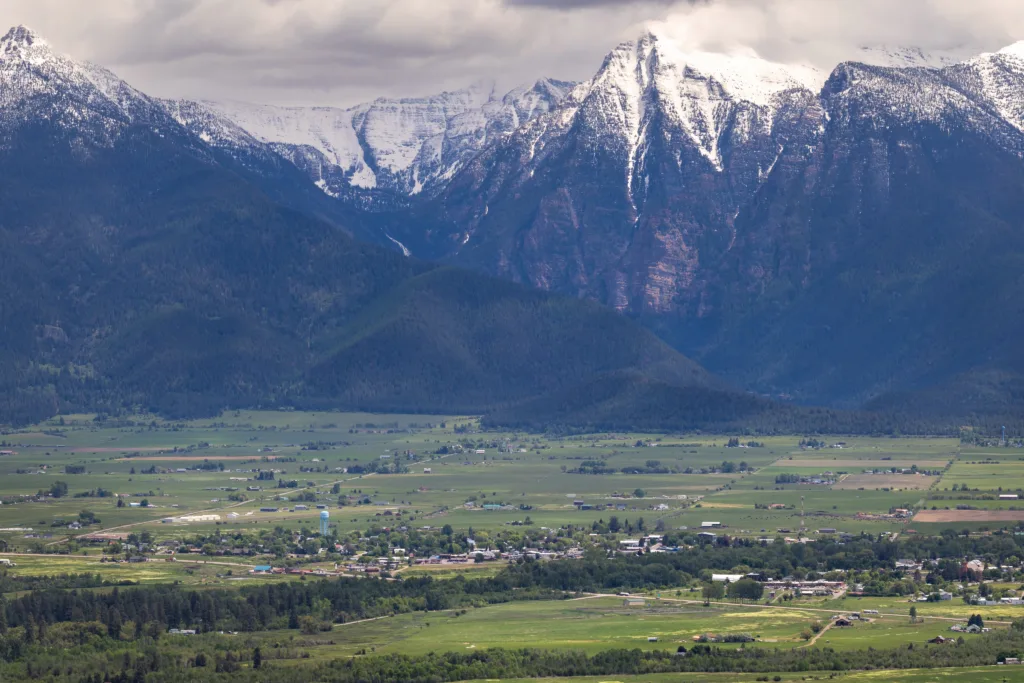
The Mission Valley sits at roughly 47 degrees north and 3,000 feet of elevation. November brings the first real cold, December and January are the coldest stretch, and snow can fall any time between October and May. The Missions hold snow well into June; the valley floor opens up earlier. Days are short. Around the winter solstice, the sun rises after eight and sets before five, and the Missions throw their long late-afternoon shadow across the valley well before the rest of the state has gone dark.
Highway 93 stays plowed early and often. The smaller roads (into Charlo, up to trailheads, around the lake to the west shore) are also plowed but slower to clear after a storm. Snow tires are expected. Studs are common but not required by law.
What’s open year-round
More than you’d guess. The cultural side of the valley carries the off-season well.
St. Ignatius Mission is open daily for self-guided visits and runs its parish schedule through the winter. The Three Chiefs Culture Center in Pablo is one of the most rewarding visits to make in cold weather, when the building is quiet and the exhibits get the attention they’re built for. It keeps weekday hours year-round. The Ninepipes Museum of Early Montana runs a winter schedule; call or check current hours before you drive. The Polson Flathead Lake Museum closes for the season in mid-September and doesn’t reopen until mid-May, so save it for the warm half of the year.
The CSKT Bison Range is open year-round, but the long Red Sleep Mountain Drive auto loop typically closes after the first major snow and reopens in late spring. The lower visitor area stays accessible. Winter is when you may see the bison closest to the open meadows and the bald eagles working the Mission Front above them.
The Garden of One Thousand Buddhas outside Arlee is open year-round and is genuinely transporting under snow.
The Folkshop in St. Ignatius runs its full schedule. So does most of the practical commerce of the valley: hardware, auto parts, grocery, banks, post offices, churches. The towns work because they have to.
Food and lodging in the off-season
Most restaurants are open year-round but run shorter hours, especially Sunday and Monday. The bakery side of the map is reliable. The coffee shops are reliable. Bar grills stay open but their patios close, which thins the seating on a busy night. The lake-view dining rooms in Polson and the steakhouse in Arlee run their full schedules.
Lodging is the soft spot of the off-season. KwaTaqNuk Resort in Polson and Big Arm Resort and Casino on the west shore stay open year-round. Allards Stage Stop in St. Ignatius and Ninepipes Lodge in Charlo are reachable through winter but worth calling ahead about; some lodging runs reduced housekeeping or weekday-only operations. Most lake-side RV parks and vacation rental cabins are closed October through April. If you’re coming in February, book ahead and confirm directly.
What’s not open
The lake outfits go dormant. The marinas, the boat rentals, the kayak and paddleboard outfits, and the Wild Horse Island shuttles are all closed roughly October through May. The cherry orchards are dormant. The summer farm stands are closed. Mission Mountain trailhead access east of St. Ignatius is snow-locked from late fall through spring, and the routes that allow visitors require CSKT Conservation Licenses when they reopen. The summer event calendar of powwows, fairs, festivals, and outdoor markets is on pause until spring. Big Arm Unit of Flathead Lake State Park closes its camping in winter; the day-use area stays accessible for shoreline walking.
Why someone would come
The lake is a different lake in winter. Flathead Lake rarely freezes over fully, since it is deep enough and current-mixed enough to resist a full freeze, but the bays freeze and the shoreline carries ice. The views of the Missions from the Polson bay road are striking in any season; in winter they go quiet.
The Bison Range in winter is the quiet version of a heavily-visited summer experience. Fewer cars on the lower loops, the bison closer in, eagles overhead. Ninepipes National Wildlife Refuge in November and again in March is migration shoulder for waterfowl and sandhill cranes.
The towns are themselves. In summer the visitor economy is loud; in winter the towns are mostly carrying on at their normal pace. You can have an entire morning at the Three Chiefs Culture Center to yourself. You can park anywhere on Main Street in St. Ignatius. You can talk to the person making your coffee for longer than thirty seconds.
And the cold itself is part of it. The Missions in their winter shape, snow holding the contour lines. The valley floor brown and silver. The big sky doing what the big sky does at low sun angles. People who come in winter come back in winter.
If you’re planning a winter visit
- Call ahead to confirm hours at any specific business you’re planning around. Most listings on this site don’t yet carry detailed winter hours; that’s on us to fix and we’re working on it.
- Pack for actual winter. Layers, real boots, a hat, gloves, a wind-blocking outer layer. The valley is colder and windier than the elevation suggests.
- If you’re driving in from Missoula or Kalispell, check Montana DOT 511 road conditions in the twenty-four hours before your drive. Most winter days on 93 are uneventful. A few aren’t.
- If you want to fish, look up Montana ice-fishing regulations for Flathead Reservation waters separately from non-reservation Montana state waters. The reservation has its own permits and rules.
- The valley has limited late-night options year-round and fewer in winter. Plan dinner for 6 to 7 p.m., not 9.
A closing thought
The valley isn’t a winter resort destination and won’t pretend to be. There’s no ski lift, no ice festival, no manufactured winter draw. What’s here from November through April is the valley itself, with most of the tourists subtracted out and most of the locals carrying on. That is the appeal. If you’ve already done the summer Mission Valley and want the harder, quieter version, this is the season.