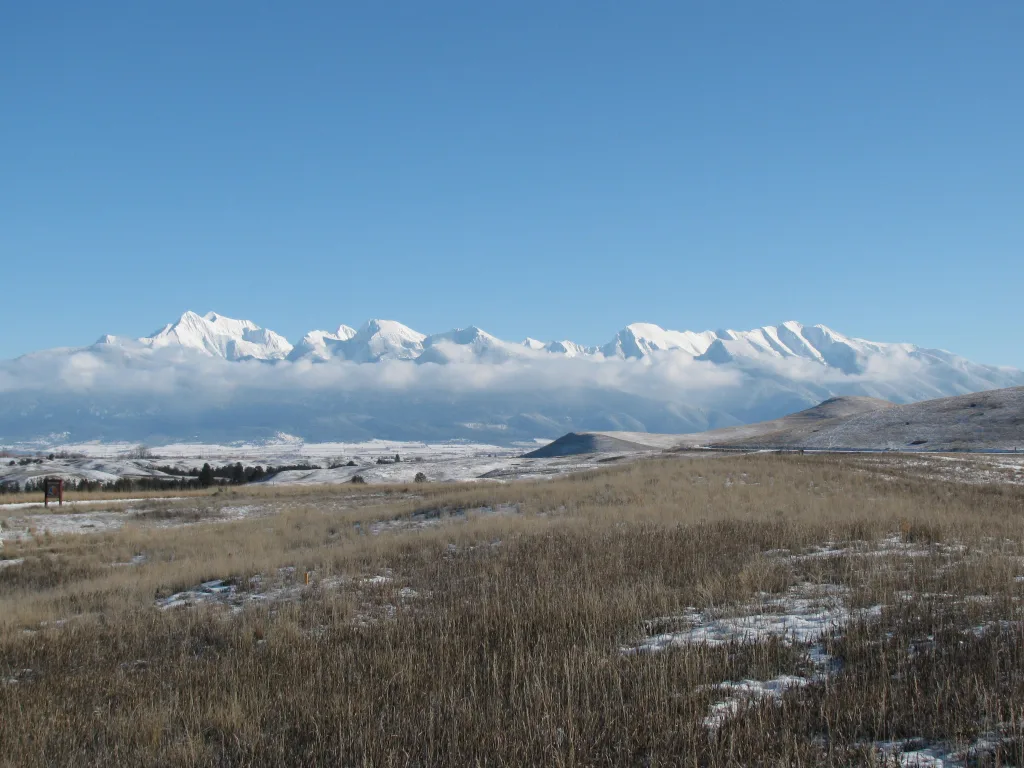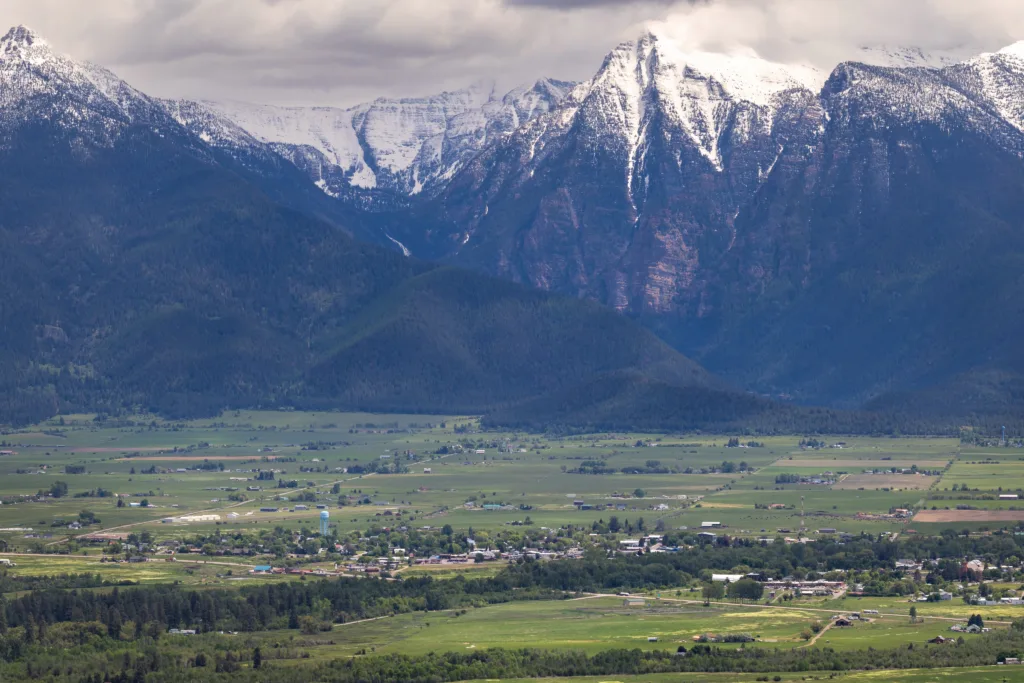

If you’re seeing the Mission Valley for the first time, see it from the road that runs through it. Highway 93 is the valley’s spine, the wire that strings the Mission Valley together from Big Arm on Flathead Lake to Arlee at the south end. The drive runs faster than you think it will and longer than you want it to. Most people stop.
This is what to stop for, town by town, going north to south.
Big Arm and Dayton
You hit the west shore of Flathead Lake before you hit the valley proper. Big Arm and Dayton, two unincorporated communities a mile apart, hold most of the visitor-facing lakeshore between Lakeside and Polson. Big Arm Resort & Casino anchors the strip. The shoreline behind it opens into Big Arm Unit of Flathead Lake State Park, several marinas, and rental outfits for boats, kayaks, and stand-up paddleboards. Shuttles run from here to Wild Horse Island, the largest island on the lake and a state park in its own right. Big Arm Marina & Grill and The Chuck Wagon handle the hungry-after-the-lake hour. If you want one quintessentially Flathead Lake afternoon, this is the stretch for it.
Polson
The lake ends at Polson and the valley begins. Polson is the biggest place in the Mission Valley and the seat of Lake County, which means it carries the densest cluster of anything a road trip might need. The Polson Flathead Lake Museum and the Polson Fairgrounds anchor the local history and the summer event calendar. KwaTaqNuk Resort & Casino sits on the lakefront and is one of the most visible CSKT-owned operations in the area. The Flathead Lake Biological Station, at the southwest edge of town, has been running freshwater research on the lake for more than a century. Lady Bird Sky Riders flies scenic flights out of the Polson airport. The food map is the densest in the valley: brewpubs (Glacier Brewing Company, Growlers on Main), bakeries (Sweet Bliss, Lake City Bakery & Eatery), Mexican (Fiesta En Jalisco), lakefront dining (Finley Point Grill, The Shoe Lakeview Dining and Spirits), and the chain pizza-burger layer on top. If you’re going to fuel up or buy something for the rest of the drive, do it here.
Pablo
Eight miles south of Polson is Pablo, the administrative heart of the Confederated Salish and Kootenai Tribes. Salish Kootenai College is here. So is the Three Chiefs Culture Center, which holds CSKT cultural and historical exhibits and is one of the best places to start understanding the people whose land this is. Pablo National Wildlife Refuge sits just outside town. Pablo proper is small but functional: Pizza Cafe Pablo for casual food, Tailgate Bar and Grill for sit-down, Pablo Family Foods for groceries, and Foodstead doing local food production.
Ronan
Eight more miles south. Ronan is the second-biggest place in the Mission Valley and the practical center of its southern half. The downtown carries the second cluster of services after Polson: hardware, auto parts, grocery, hospital, banks, and a real restaurant list. The Pearl Theater anchors the historic downtown block. Mission Mountain Golf Club sits east of town with the Missions standing up behind the fairway. The coffee scene runs deeper than you’d expect for a town this size (Dobson Creek Coffee Co, Iced Mocha Joint, Buffalo Joes Coffee Shop, Brew Thru), and Ronan Cooperative Brewery handles the evening end. Lynn’s Drive In is the diner you stop at out of habit; Stella’s Deli & Bakery is the one you stop at because someone told you to.
Charlo (a few miles east of 93)
Charlo isn’t on 93. It’s a few miles east on Highway 212, and it earns the turn. Three of the valley’s most distinctive destinations sit in or near Charlo: the CSKT Bison Range, the Ninepipes Museum of Early Montana, and the wetlands of Ninepipes National Wildlife Refuge south of town. Ninepipes Lodge offers the closest lodging to the Bison Range. Tiny’s Tavern and Allentown Bar and Restaurant cover the in-town basics. If you’ve an extra hour and you’re moving through the valley, this is the detour to take.
St. Ignatius
Back on 93, fifteen minutes further south. St. Ignatius sits hard against the wall of the Mission Mountains and is one of the oldest settlements in the valley. The Mission church is the obvious landmark, painted inside with murals worth the time whether or not you’re Catholic. Doug Allard’s Trading Post anchors the south end of town and runs the Flathead Indian Museum alongside. Fort Connah, a few miles north, is the oldest surviving Hudson’s Bay Company post in the United States and is maintained by a local restoration society. The Folkshop, in the center of town, is a non-profit thrift store that runs employment programs for adults with disabilities. Old Timer Cafe and Ty’s Malt Shop handle the early and the after-school crowd; The Kapi Shop runs coffee. The Mission Mountain trailheads start east of town; some routes require a CSKT Conservation License, so check current rules before you go.
Arlee
Twelve miles south of St. Ignatius and the southernmost place in the Mission Valley. Arlee is the home of the Arlee Celebration Powwow, held around the Fourth of July and one of the largest powwows in this part of Montana. The Garden of One Thousand Buddhas, just outside town, is an open-air sculpture garden that has been open to the public for years and is a destination in its own right. Kampfire Steakhouse is the upper end of the valley’s dinner range south of Polson. The Bison Inn Cafe, The Biscuit Cafe, Stageline Pizza, and Pigasus Bar fill out the everyday options. From Arlee, Missoula is another twenty-some miles south on 93.
A few notes for the drive
Highway 93 through this stretch is mostly two-lane, with passing lanes at intervals. Wildlife crossings are common at dawn and dusk; the valley floor is fenced and underpassed in places to protect bears, elk, and bighorn sheep. Cell service is reliable in the towns and patchy between them. Gas stations exist in every town but are denser in Polson and Ronan, so don’t run the tank to empty south of Ronan if you can help it. Most of the businesses listed above are closed on Sunday or run short Sunday hours, so a Sunday drive becomes a window-shopping drive.
And one last thing: this is a working valley. The towns aren’t road-trip stage sets. The people who live here are the same people running these businesses. Tip well, take the time, and the valley repays you.